You see the headlines: stock markets hit new highs, tech giants post record profits. Then you talk to a friend whose small business is barely hanging on, or you read about another round of layoffs in a traditional industry. The disconnect is jarring. This isn't a uniform recovery; it's a K-shaped economy. I've watched this play out not just in charts from the Federal Reserve, but in the portfolios I manage and the conversations I have with clients from all walks of life. The line between those on the ascending arm of the 'K' and those on the descending one isn't just about luck—it's increasingly about sector, skill set, and strategy.
What We'll Cover
What Exactly Is a K-Shaped Economy?
Forget V-shaped or U-shaped recoveries. A K-shaped economy describes a divergent path where different segments recover at starkly different speeds, or not at all. Imagine the letter K. One arm shoots upward, representing sectors, asset classes, and income groups that thrive post-crisis. The other arm slopes downward, representing those that deteriorate or stagnate.
The key is that aggregate economic numbers—like GDP growth—can look healthy while masking severe underlying fractures. You get a positive headline number, but it's built on the explosive growth of a few while many are left behind. This isn't theoretical. Look at the data from the last major economic shock. According to analysis from the World Bank, while global asset markets recovered swiftly, global poverty reduction goals were set back years. That's the K-shape in a nutshell: capital and certain industries did great; human welfare and other industries did not.
A crucial point most miss: The K-shape isn't just between the "rich" and the "poor." It's increasingly within the middle class. A software engineer and a retail middle manager might have similar titles and educations, but their economic trajectories in this environment are worlds apart. Your profession is becoming a stronger predictor of your financial future than ever before.
The Real-World Divergence: Who's Up, Who's Down
Let's get specific. This divergence shows up in clear, tangible ways that affect real people.
The Ascending Arm: Riding the Wave
This side is powered by digitization, capital markets, and specialized knowledge. Think big tech, cloud computing, fintech, and anyone whose job can be done seamlessly from a laptop. Asset owners, particularly those holding equities and real estate in thriving metros, saw their net worth balloon. Remote knowledge workers often maintained income and slashed commuting costs, effectively getting a raise. I've had clients in these fields who, frankly, found the last few years financially beneficial, which feels strange to say during a period of broader crisis.
The Descending Arm: Facing the Squeeze
Here, you find sectors reliant on physical presence, high human contact, or those disrupted by technology. Hospitality, traditional retail, and parts of commercial real estate got hammered. Workers in these fields faced job insecurity, stagnant wages against rising inflation, and little wealth accumulation from assets. The pain is also geographic. The economic dynamism concentrates in superstar cities and tech hubs, leaving other regions feeling hollowed out.
| Aspect | The Ascending Arm (Top of the K) | The Descending Arm (Bottom of the K) |
|---|---|---|
| Primary Sectors | Technology, Finance, Professional Services, E-commerce | Hospitality, Travel, Traditional Retail, Oil & Gas |
| Wealth Driver | Equity Holdings, Real Estate (certain markets), High Wages | Labor Income (often stagnant), Minimal Asset Ownership |
| Job Security | High demand for skills, remote work flexibility | Cyclical vulnerability, automation pressure |
| Exposure to Inflation | Better ability to pass on costs or command higher wages | Wages lag prices, spending hit harder by cost increases |
The Forces Driving the Split
Why is this happening now with such intensity? It's a perfect storm of pre-existing trends supercharged by recent events.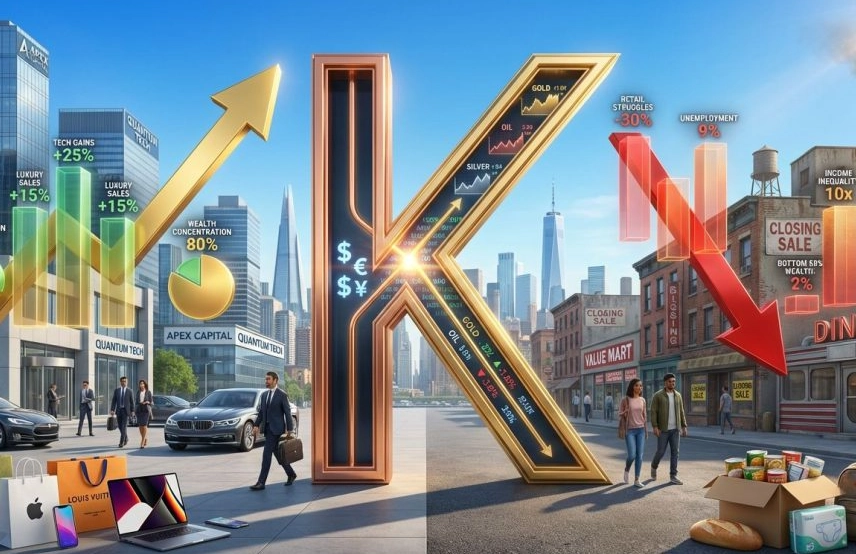
Accelerated Digital Adoption: The pandemic didn't create the move online; it put it on steroids. Companies and consumers leaped forward 5-10 years in digital adoption in a matter of months. This was a massive tailwind for tech and a headwind for anything brick-and-mortar.
Unconventional Monetary Policy: Central banks flooded the system with cheap money to prevent collapse. This liquidity overwhelmingly found its way into financial assets (stocks, bonds, housing), boosting the wealth of those who already owned them. If you didn't have assets to begin with, this policy did little for you directly—a phenomenon sometimes called the "asset-price inflation" divide.
The Skills Gap Becomes a Chasm: The premium on tech-adjacent skills (data analysis, digital marketing, coding) skyrocketed, while demand for other skills softened. This isn't about college degrees per se; it's about very specific, in-demand competencies. I've seen talented people in marketing struggle because their experience is in print media buys, not algorithmic social media campaigns.
One subtle error I see: people blaming globalization alone. It's part of it, but the bigger driver now is technology acting as both a creator and a destroyer of value within domestic economies.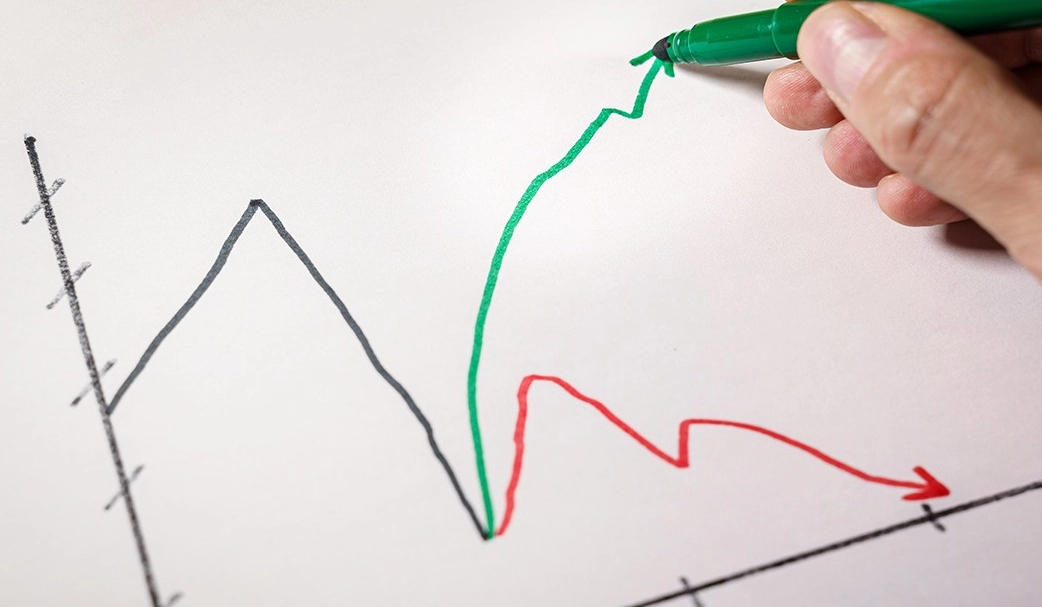
What This Means for Your Investments
If you're investing as if we're in a normal, rising-tide-lifts-all-boats economy, you're likely missing major risks and opportunities. Your portfolio needs to acknowledge the split.
Sector Selection is Critical: Broad index funds are a good foundation, but they can mask risk. An S&P 500 index is now heavily weighted toward the handful of mega-cap tech stocks driving the ascending arm. You might think you're diversified, but you're increasingly betting on the continued dominance of those specific firms. Consider intentional tilts. Do you have exposure to cybersecurity, digital infrastructure, or healthcare innovation? These are structural growth areas within the 'K'. Conversely, be wary of overexposure to sectors on the back foot unless you're a deep-value contrarian with a long horizon.
Rethink "Safe" Assets: In a K-shaped world, traditional safe havens can behave differently. Bonds have faced headwinds from inflation. Certain real estate (downtown office space) carries new risks. Liquidity and flexibility in your investments become more valuable.
A Non-Consensus Tactic: Instead of just picking winning sectors, some of the most interesting opportunities I've seen involve companies that bridge the K-shape. Think of firms that provide automation tools to struggling manufacturers, or fintechs that bring financial services to underserved populations. They profit by addressing the imbalances the K-shape creates.
Your Personal Finance Survival Checklist
Beyond the markets, this is about personal resilience. Here’s a actionable list, born from advising people through this mess.
- Audit Your Career's 'K' Position: Be brutally honest. Is your industry or role on the ascending or descending arm? If it's the latter, what's your pivot plan? Upskilling isn't a buzzword; it's insurance. It could mean a coding bootcamp, a project management certification, or learning data visualization tools.
- Build an Asymmetric Emergency Fund: The old 3-6 months of expenses rule might be low if your job is in a vulnerable sector. Aim for 6-12 months. This buffer is your single biggest defense against being forced to sell assets at a bad time or take a subpar job.
- Prioritize Asset Acquisition: Your labor income is on one side of the K. Your investment income needs to be on the other. Automate contributions to investment accounts. Start small if you must, but start. The goal is to have a portion of your wealth growing with the ascending arm, even if your paycheck doesn't.
- Manage Debt Strategically: High-interest consumer debt will drag you straight down the descending arm. Aggressively pay it down. Conversely, low-interest, fixed-rate debt (like a mortgage) might be manageable, as inflation can erode its real value over time.
- Cultivate Multiple Income Streams: Don't rely on one employer in one sector. A side hustle, freelance gig, or rental income (if feasible) creates a diversified personal income statement. It makes you less fragile.
This isn't about becoming a day trader or a tech guru overnight. It's about making deliberate choices that move the needle of your financial life toward resilience.



Leave a Comment